
Chest exercises: which ones for the upper, middle and lower chest?
By Franck Berthelot9 min read
The best chest exercises depend on which part of the muscle you want to work. The incline bench press at 30° works the upper chest the most, and the flat bench press works the middle and lower chest. Studies of muscle activity link the decline bench press to the lower chest. With dumbbells, the press and the fly build muscle size equally. With no equipment, push-ups set to the same load as the bench press give the same gains in muscle and strength.
Which chest exercises work each part of the muscle?
The pectoralis major has three parts: clavicular at the top, sternal in the middle, costal at the bottom. The bench angle changes which part works hardest. In the study by Rodríguez-Ridao and colleagues, with 30 trained lifters, the upper chest responded most at 30°, and the middle and lower chest on a flat bench. Beyond 45°, the front of the shoulder takes over.
| Exercise | Area | Equipment | Level |
|---|---|---|---|
| Incline Dumbbell Press | Upper | Dumbbells, incline bench | Beginner |
| Incline Barbell Bench Press | Upper | Barbell, incline bench | Intermediate |
| Cable Low-to-High Fly | Upper (target area per the 6way exercise guide) | Cable pulleys | Beginner |
| Bench Press | Middle and lower | Barbell, bench | Intermediate |
| Dumbbell Bench Press | Middle and lower | Dumbbells, bench | Beginner |
| Chest Fly | Chest | Dumbbells, bench | Beginner |
| Pec Deck Machine | Upper and middle | Machine | Beginner |
| Machine Chest Press | Middle | Machine | Beginner |
| Decline Barbell Bench Press | Lower | Barbell, decline bench | Intermediate |
| Dumbbell Decline Bench Press | Lower | Dumbbells, decline bench | Intermediate |
| Push-ups, Knee Push-Ups, Incline Push-Up | Chest | None | Beginner |
| Decline Push-Up | Upper (target area per the 6way exercise guide) | A bench or a step | Intermediate |
| Dips | Chest and triceps | Parallel bars | Intermediate |
These measurements of electrical activity (EMG) describe a single session; the sections below also cite trials that measured growth over several weeks. To set the load for each exercise, use the effort scale from our article on RPE in strength training, set after set.
Which exercises work the upper chest?
The incline bench press has been tested for upper chest growth. In the trial by Chaves and colleagues, 47 untrained men did eight weeks of flat bench press, incline bench press or both, once a week. At the second intercostal space, where the clavicular part is measured, the muscle grew thickest with the incline press. The difference reached 0.62 cm over the flat bench press.
Incline Dumbbell Press
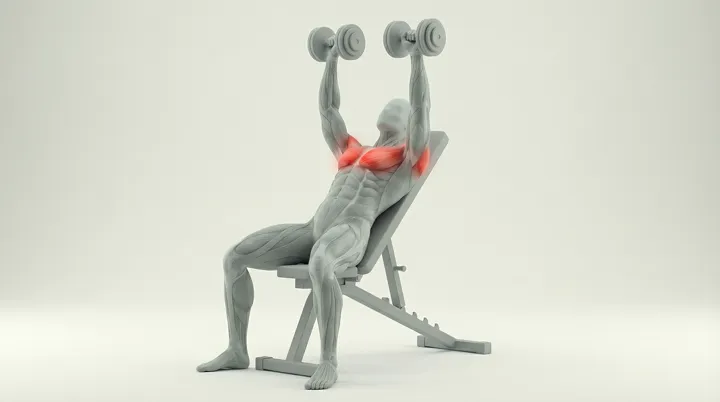
Bench set at around 30°, dumbbells above your chest, elbows at about 45 to 60 degrees from your torso on the way down. On the barbell press, this is the angle where the upper chest responded most.
Incline Barbell Bench Press
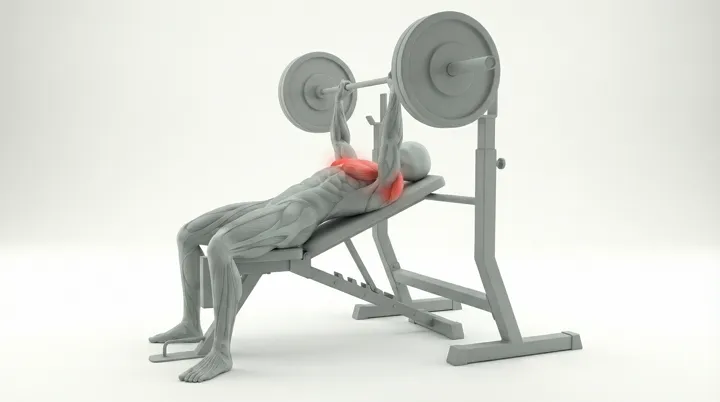
Same angle, with the bar lowered towards your upper chest. Keep the bench below 45°: any higher and the front of your shoulder does more of the work, and your chest less. In ten competitive bodybuilders, the incline bench press at 45° was the exercise that worked the clavicular part hardest while the bar went up.
Cable Low-to-High Fly
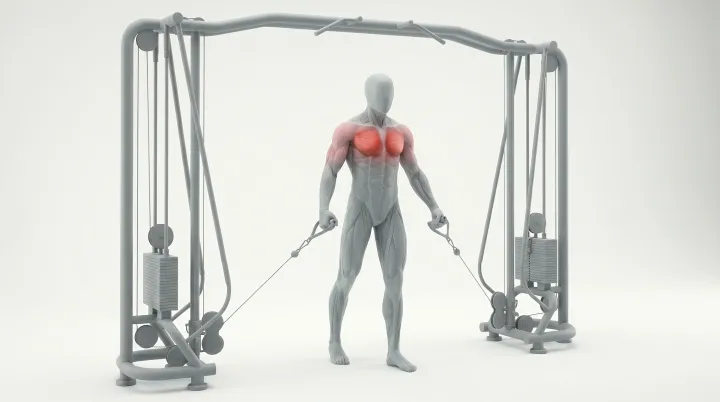
Pulleys set low, arms slightly bent, bring your hands together in front of your face as you lift. According to the app's exercise guide, it mainly works the upper chest, the clavicular part.
Which exercises work the middle chest?
On a flat bench, the middle and lower chest work harder than on an incline bench. Barbell and dumbbells produce similar activity. That is what the study by Welsch and colleagues measured in 12 men and women.
Bench Press
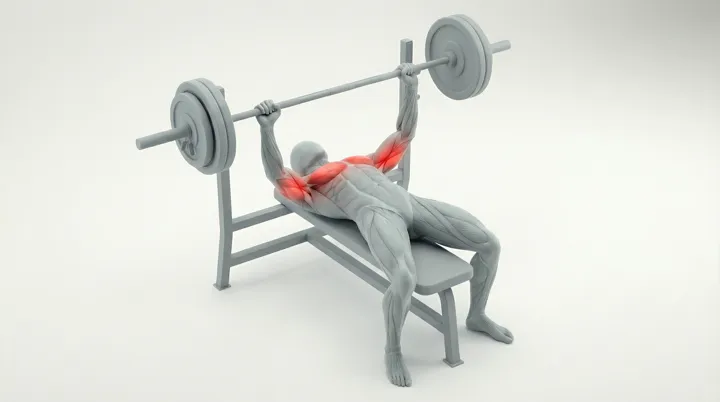
Shoulder blades squeezed, feet on the floor, bar lowered to your lower chest, as the app's exercise guide describes. It opens the "Upper A" workout of 6way's Chest & Arms programme, with 4 sets of 6 to 8 reps.
Dumbbell Bench Press
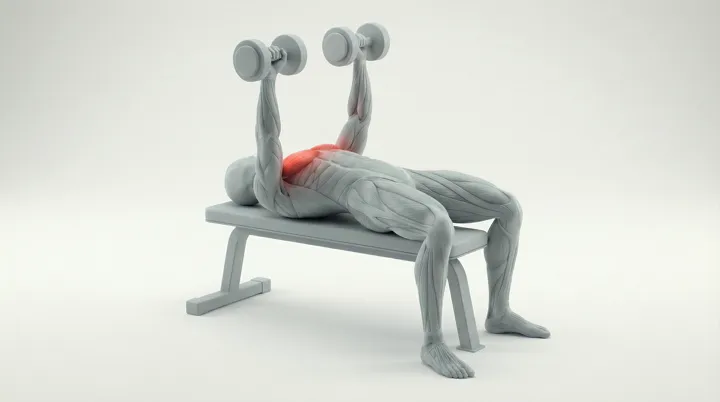
The app's exercise guide gives it a greater range of motion than the barbell version. Welsch rates it as interchangeable with the barbell bench press. With no bench, you do it lying on the floor: that is the instruction the app gives in its home programme.
Chest Fly
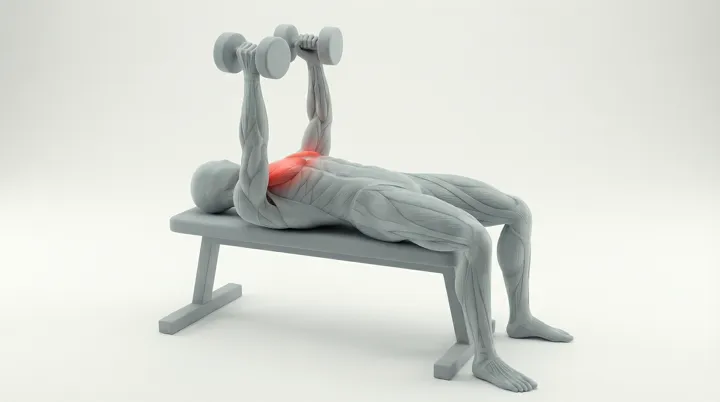
Arms almost straight, open the dumbbells in an arc until you feel the stretch across your chest. In the trial by Dell'Avanzi and colleagues, published in 2026, 26 participants did ten weeks of either dumbbell presses or flies, twice a week. Both groups gained as much, across the whole muscle and at all three measurement points, from the sternum towards the shoulder.
Pec Deck Machine
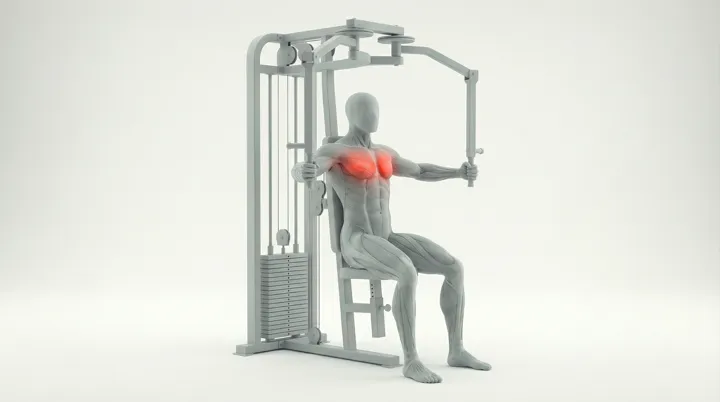
Seated, back against the pad, bring your arms together in front of your chest along a guided path. In 15 beginners followed for twelve weeks, the upper chest grew 17 to 18% thicker, and the sternocostal part 21%.
Machine Chest Press
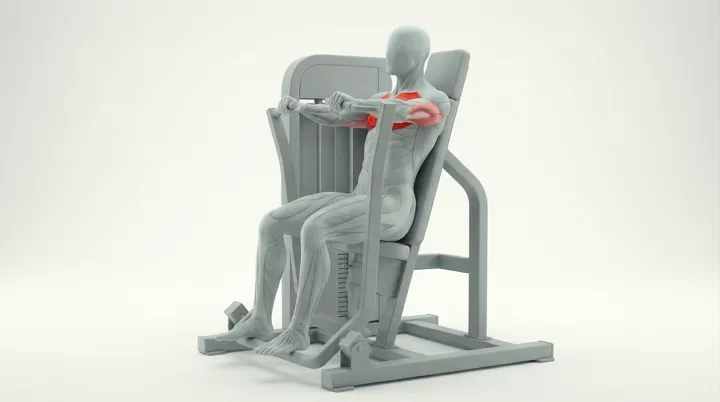
Handles at chest height, fixed path: it is the easiest press to learn. The sternal part worked as hard as on the bench press. A machine builds as much as free weights, in strength and in muscle size.
Which exercises work the lower chest?
On the decline bench press, your head is lower than your hips, and the app's exercise guide assigns it to the lower chest. The studies reviewed by Rodríguez-Ridao link the decline press to the lower chest, the flat press to the sternocostal part and the incline press to the upper chest. In Coratella's bodybuilders, the decline press at 15° below horizontal worked the sternocostal part as hard as the flat press. Of the four exercises measured, it was the one where the front of the shoulder worked least.
Decline Barbell Bench Press
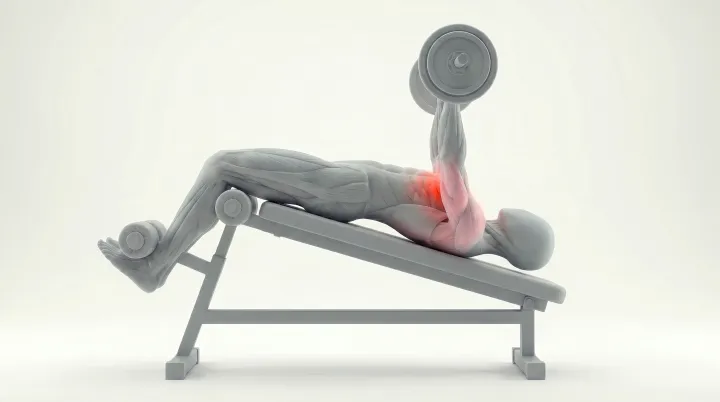
Legs hooked under the bench pads, bar lowered towards your lower chest. The app's exercise guide notes that your shoulders do less of the work.
Dumbbell Decline Bench Press
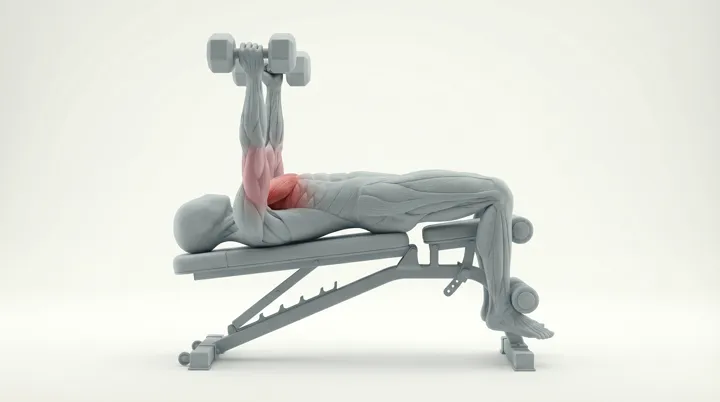
Same position, with dumbbells: the range of motion is greater than with the barbell.
Which chest exercises need no equipment?
At equal load, push-ups work the chest as well as the bench press. In the trial by Kikuchi and Nakazato, the push-ups were adjusted through body position, on the knees for example, to match the load of a bench press at 40% of maximum. After eight weeks at two workouts a week, both groups had gained as much chest thickness and strength.
Push-ups
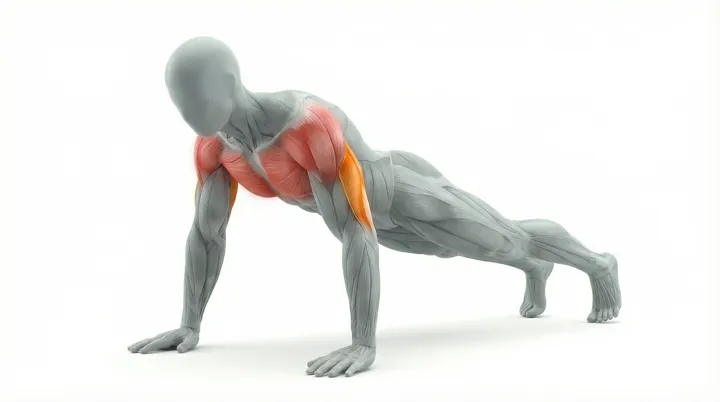
Hands slightly wider than your shoulders, body braced from head to heels, chest down to a few centimetres from the floor. In 30 trained students, five weeks of push-ups loaded with a resistance band gave the same strength gains as the bench press.
Knee Push-Ups and Incline Push-Up
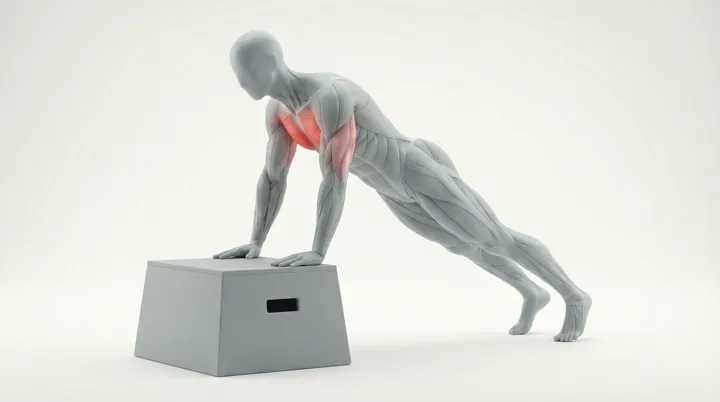
Hands on a bench or a box, or knees on the floor: the load drops. In the app, incline push-ups start the progression, which then moves on to knee push-ups, then full push-ups.
Decline Push-Up
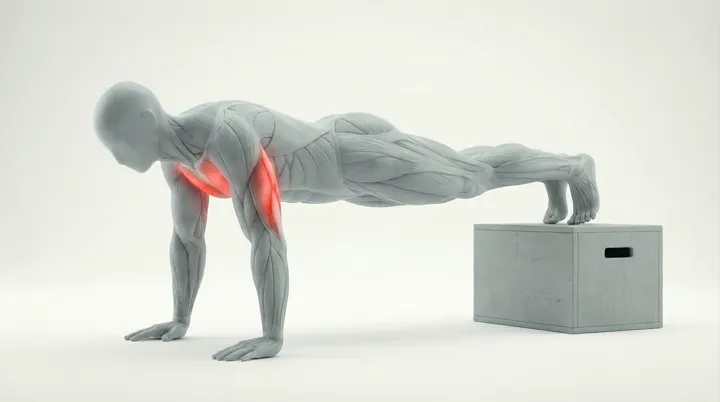
Feet on a bench or a step, hands on the floor. According to the app's exercise guide, this version works the upper chest; the shoulders and triceps assist the movement.
Dips
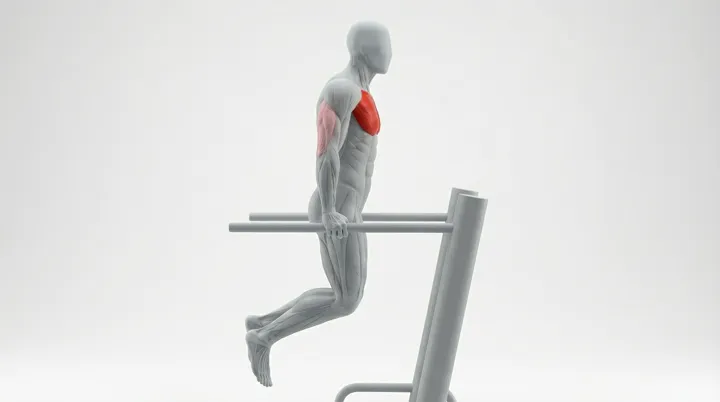
Arms straight on two parallel bars, torso leaning slightly forward, lower yourself until your shoulders reach the level of your elbows. In 15 men who did one set of dips to exhaustion, McKenzie and colleagues found that dips worked the pectoralis major and the triceps effectively.
How many sets and workouts for the chest?
Aim for at least 10 sets of chest work a week, spread over two workouts. The 2026 ACSM position stand links greater muscle gain to 10 or more sets per muscle group per week. At equal volume, one workout or more than five a week give the same muscle gain, but strength improves more from two workouts upwards.
Beginners don't need much. On the pec deck, one set per workout built as much muscle as three in beginners. In 6way's Chest & Arms programme, the first upper-body workout goes from the bench press to the incline dumbbell press, then the cable fly. With the dumbbell bench press in the second workout, the week adds up to 13 sets of chest work. Muscle also depends on what you eat: count your protein for the day.
What 6way does for your chest exercises
The exercises in this article come from 6way's library, which holds more than 400 technique videos. For the chest, the catalogue has 42 exercises, from the bench press to knee push-ups.
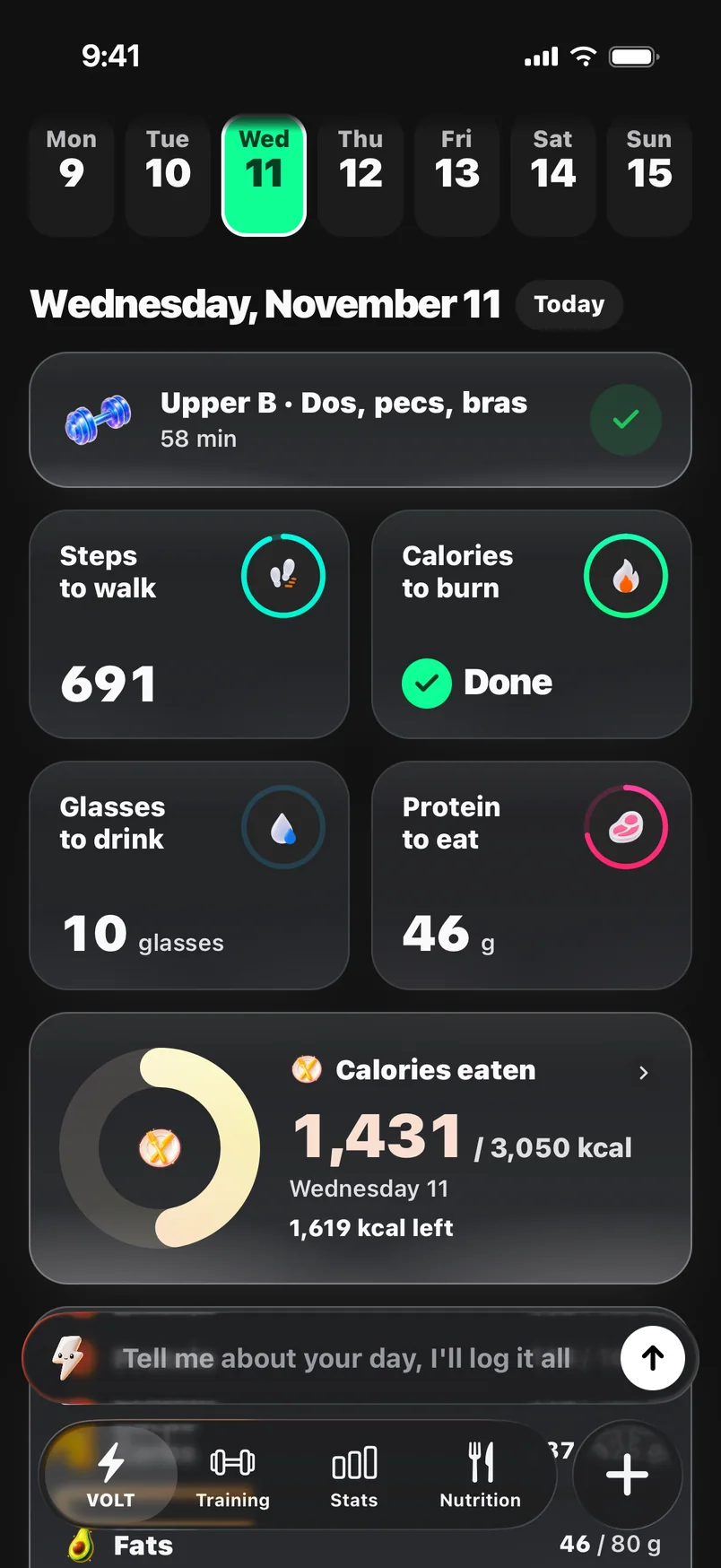
VOLT, 6way's AI coach, places these exercises according to where you train, your equipment and the areas you need to protect. With no equipment, the dumbbell bench press becomes push-ups. With a shoulder to protect, VOLT adapts the exercises in your programme, and the app shows the reason for the change on the exercise. If you ask VOLT to prioritise your chest, it adds chest sets to your programme. An exercise you no longer want to do stays out of your programme.
In the Chest & Arms programme, the rule fits in one sentence: complete every set at the top of the range, and the load goes up the next time. The app is on iPhone and Android: 6way.app.
Frequently asked questions
No single exercise covers the whole muscle. The bench press works the middle and lower chest the most, the incline press at 30° the upper chest. Combining the two covers all three parts. For growth, the equipment matters less than the work you put in. Free weights and machines give similar gains, and the dumbbell fly builds as much muscle as the dumbbell press. So choose the exercise you do well and without pain, then keep increasing the load.
Yes, as long as the load keeps up with your progress. Set to the load of a bench press at 40% of maximum, push-ups gave the same gain as the bench press over eight weeks. Loaded with a resistance band, they matched the bench press for strength in trained lifters. Dips are a good addition, for the chest and the triceps.
It is the best-supported option. In beginners, eight weeks of incline bench press grew the clavicular part 0.62 cm more than the flat bench press. The angle matters: 30° gave the highest upper chest activity, and beyond 45° the shoulder takes over. The pec deck also works the upper chest, at a rate close to the middle.
Rest depends on the load. In 6way's Chest & Arms programme, the bench press, in sets of 6 to 8 reps, comes with 3 minutes of rest. The incline dumbbell press gets 2, the cable fly 1. In this programme, the heavier the set, the longer the rest.
Lasting pain or an injury calls for a doctor's advice before you start again. For mild discomfort, flag a shoulder to protect in 6way: VOLT adapts the exercises in your programme, and the app shows the reason for the change on the exercise. The dumbbell floor press, done lying on the floor, stops your elbows on the floor and limits the range of motion.